Send a message: 1-877-659-3215
#WOMENLIFEFREEDOM
Send a message: 1-877-659-3215
#WOMENLIFEFREEDOM

Hypothermia and Hyperthermia: First Aid Treatment and Signs & Symptoms:

What is hypothermia?
Hypothermia happens when the body loses heat faster than it can produce it, causing the core temperature to drop below 35°C (95°F). This can occur from cold weather, wet clothing, wind, or prolonged exposure to cold water.

Signs and symptoms:

  • Shivering (early sign, may stop as condition worsens)

  • Cold, pale skin

  • Slurred speech, confusion

  • Clumsiness or stumbling

  • Slow breathing or pulse

  • In severe cases: unconsciousness

Dangers:
The heart, brain, and organs slow down. Without quick care, hypothermia can lead to cardiac arrest and death.

Care steps:

  1. Remove the person from the cold environment.

  2. Take off wet clothing; replace with dry layers.

  3. Cover with blankets, especially the head and neck.

  4. Provide warm, sweet drinks if the person is awake.

  5. Warm the person gradually—avoid direct heat like hot water or heating pads.

  6. Call 911 if symptoms are moderate to severe.

Types of hypothermia

Mild Hypothermia

Core temperature: ~35°C to 32°C (95°F–90°F)

Key signs:

  • Shivering (strong and uncontrollable)

  • Cold, pale skin

  • Goosebumps

  • Fast breathing and heart rate

  • Alert but may be slightly confused

  • Poor coordination

Summary:
The body is still trying to warm itself by shivering. This stage is serious but the easiest to reverse.

Care:
Warm the person gradually, add dry layers, warm drinks if conscious.


Moderate Hypothermia

Core temperature: ~32°C to 28°C (90°F–82°F)

Key signs:

  • Shivering becomes less intense or stops

  • Skin becomes very cold; may look blue

  • Slow, slurred speech

  • Obvious confusion or irritability

  • Slowed heartbeat and breathing

  • Clumsiness; possible stumbling

  • Drowsiness

Summary:
The body can no longer generate enough heat. Mental function and physical ability are impaired.

Care:
Call 911. Handle gently. Begin rewarming with blankets and external heat sources (warm packs to armpits/groin), but no direct hot heat.


Severe Hypothermia

Core temperature: below 28°C (82°F)

Key signs:

  • No shivering

  • Very weak, slow, or undetectable pulse

  • Very slow breathing

  • Unconsciousness

  • Dilated pupils

  • Stiff or rigid body

  • Possible cardiac arrest

Summary:
The body’s systems are shutting down. It may be difficult to tell if the person is alive, but you must assume they are and treat immediately.

Care:

  • Call 911 immediately.

  • Handle extremely gently (movement can trigger cardiac arrest).

  • Provide passive rewarming with blankets.

  • If no breathing, begin CPR.

Hypothermia care steps

Care Steps for Hypothermia

1. Move the person to a warmer, safe place

  • Get them indoors, into a vehicle, or out of wind/rain/snow.

  • Limit their movement—handle gently to avoid shocking the heart.


2. Remove cold or wet clothing

  • Wet clothing draws heat away quickly.

  • Replace with dry, warm layers (shirts, sweaters, jackets, blankets).


3. Warm the person gradually

Use passive and active rewarming:

Passive rewarming (for mild cases):

  • Wrap in blankets, coats, sleeping bags.

  • Cover the head and neck to reduce heat loss.

Active rewarming (for moderate cases):

  • Use warm packs or hot-water bottles wrapped in cloth.

  • Place them in the armpits, groin, and chest.

  • Never put heat directly on the skin.


4. Give warm fluids — only if they are awake

  • Warm, sweet drinks like hot chocolate or warm water.

  • Do NOT give caffeine or alcohol.


5. Monitor breathing

  • Hypothermia can slow breathing until it seems absent.

  • If the person is not breathing normally, start CPR.


6. Call 911 when needed

Call emergency services if:

  • The person is confused, very cold, not improving, or stops shivering.

  • You suspect moderate or severe hypothermia.

  • They become unresponsive.


7. Continue warming until help arrives

Keep them as still and insulated as possible.


Important DON’Ts

  • Don’t rub the skin (can cause damage).

  • Don’t use hot water, heating pads, or fires directly—can cause burns or shock the heart.

  • Don’t let them walk or exercise once they are significantly cold.

  • Don’t assume someone is dead—severe hypothermia can mimic death.

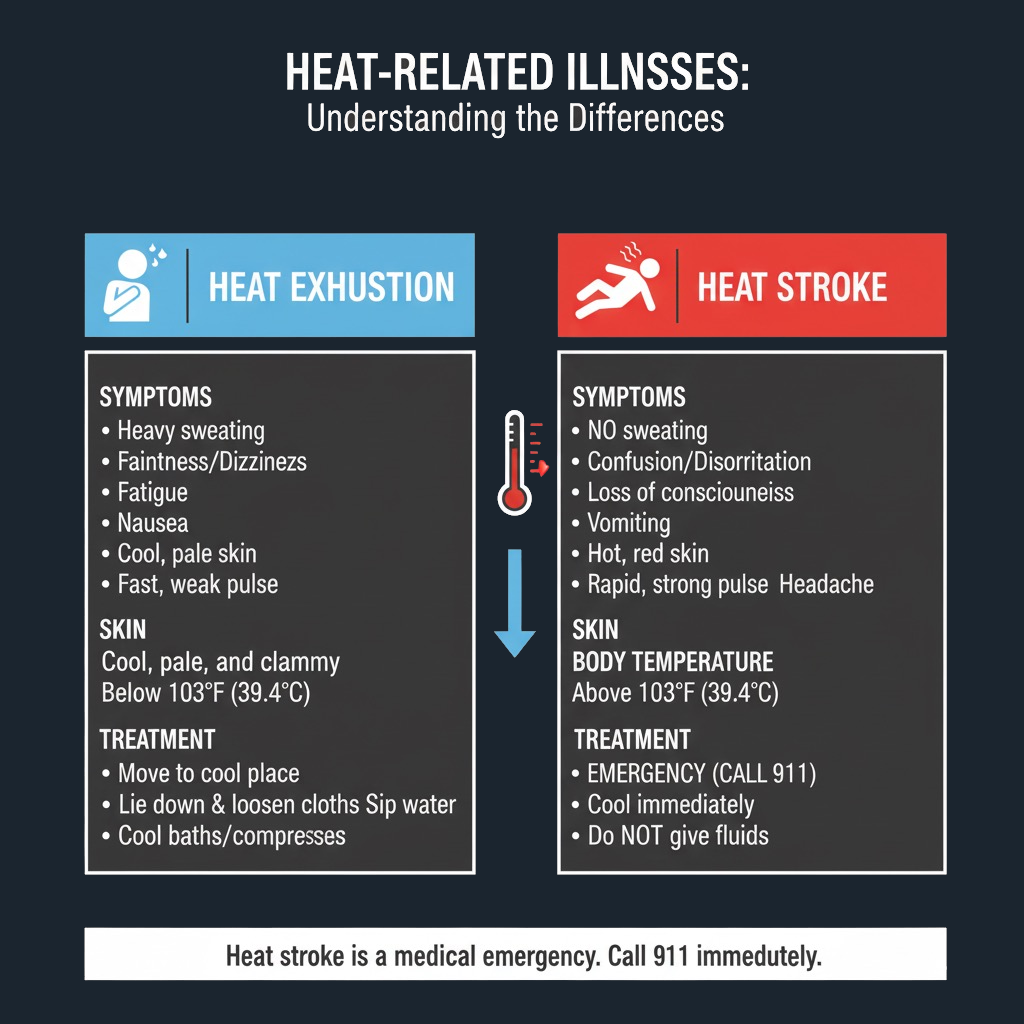
What is heat exhaustion and heat stroke?

Heat Exhaustion

What it is:
A milder form of heat-related illness caused by the body overheating, usually due to heavy sweating, dehydration, and high temperatures. The body is struggling to keep cool but can still compensate.

Signs and symptoms:

  • Heavy sweating

  • Cool, pale, clammy skin

  • Headache

  • Dizziness or fainting

  • Weakness or fatigue

  • Nausea or vomiting

  • Muscle cramps

  • Fast heartbeat

  • Thirst

Why it’s dangerous:
If untreated, heat exhaustion can progress to heat stroke, which is life-threatening.

Care steps:

  1. Move the person to a cool or shaded place.

  2. Loosen or remove extra clothing.

  3. Cool with water, fans, cool cloths, or spraying with water.

  4. Give cool water or electrolyte drinks if the person is alert.

  5. Have them rest until fully recovered.


Heat Stroke

What it is:
A life-threatening emergency where the body’s temperature rises to dangerous levels (often above 40°C / 104°F) and the cooling systems fail. The brain and organs start to overheat.

Signs and symptoms:

  • Very hot skin (may be dry or may still be sweating)

  • Confusion, irritability, or strange behaviour

  • Seizures

  • Rapid breathing or pulse

  • Vomiting

  • Decreased responsiveness or unconsciousness

  • High body temperature

Why it’s extremely dangerous:
Heat stroke can cause brain damage, organ failure, or death if not treated immediately.

Care steps (emergency):

  1. Call 911 immediately—heat stroke is a medical emergency.

  2. Move the person to a cool place.

  3. Cool rapidly using:

    • Cold packs in armpits/groin

    • Cool water on the skin

    • Wet towels and fanning

    • Cool shower or hose if safe

  4. If conscious, give small sips of cool water (do not force).

  5. Stay with the person until EMS arrives.

Heat exhaustion vs heat stroke first aid

Prevention Tips

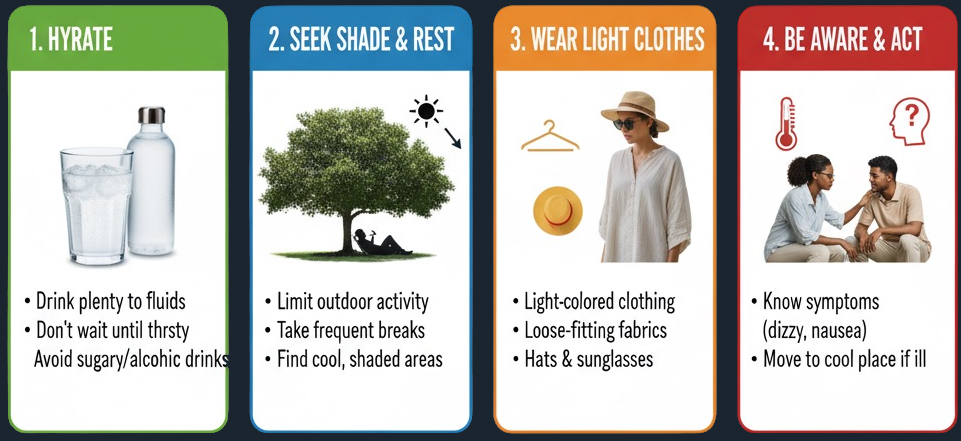
1. Stay Hydrated

  • Drink water regularly, even if you’re not thirsty.

  • Increase fluids during hot weather or physical activity.

  • Avoid alcohol and excessive caffeine—they increase dehydration.


2. Dress for the Heat

  • Wear lightweight, loose-fitting, light-coloured clothing.

  • Use a wide-brimmed hat and sunscreen.


3. Avoid the Hottest Part of the Day

  • Limit strenuous activity between 11 AM and 4 PM, when the sun is strongest.

  • Plan outdoor work or exercise for early morning or evening.


4. Take Frequent Breaks

  • Rest in shade or a cool indoor area.

  • Gradually build up physical activity in hot environments.


5. Use Cooling Measures

  • Use fans, cooling towels, misting, or take cool showers.

  • Stay in air-conditioned spaces when possible.


6. Know Your Limits

  • Slow down or stop if you feel dizzy, extremely tired, or overheated.

  • Don’t push through intense heat—listen to warning signs.


7. Protect Vulnerable People

  • Check on children, older adults, and those with medical conditions.

  • Never leave children or pets inside parked vehicles.


8. Acclimatize to Heat

  • Allow your body time (about 1–2 weeks) to adjust to hot environments, especially during the start of summer or new physical training.


9. Use Electrolytes When Needed

  • During long periods of sweating, use sports drinks or electrolyte packets to replace salt and minerals.

Heat exhaustion prevention tips

How can The Academy for First Aid and Safety train you for these emergencies?

Looking for reliable first aid training in Toronto or CPR training in Toronto? The Academy for First Aid and Safety is a certified first aid trainer in Toronto, dedicated to equipping individuals and workplaces across the Greater Toronto Area with the essential skills to respond to emergencies. With over five convenient locations in Toronto, Scarborough, Hamilton, Brampton, and Mississauga, The Academy provides flexible and accessible training options designed to meet the needs of students, employees, and organizations of all sizes. Whether you are looking for in-person first aid training in Toronto or prefer online first aid training, The Academy ensures that each course is comprehensive, engaging, and aligned with current health and safety standards.

The Academy for First Aid and Safety specializes in both first aid training in Toronto and CPR training in Toronto, offering a wide range of courses suitable for beginners, healthcare professionals, and workplace staff. Their certified instructors provide hands-on experience in essential life-saving techniques, including CPR, automated external defibrillator (AED) use, choking management, and emergency response procedures. Each session is designed not only to teach skills but also to build the confidence needed to act quickly and effectively in real-life situations. By training in CPR and first aid, participants are prepared to respond to cardiac emergencies, injuries, and other medical incidents, potentially saving lives while reducing workplace risks.

For busy professionals or those who prefer self-paced learning, online first aid training is available, offering the same high-quality instruction as in-person courses. These flexible options allow participants to complete theoretical components from the comfort of their home or office, followed by practical assessments at one of The Academy’s five locations. This blended approach ensures that every student gains both knowledge and hands-on experience, making the training practical and highly effective.

The Academy’s five strategically located centers in Toronto, Scarborough, Hamilton, Brampton, and Mississauga make it convenient for residents across the Greater Toronto Area to access certified first aid and CPR training. These locations are equipped with modern facilities and training tools to provide an immersive learning environment. Whether you are enrolling individually, as part of a workplace compliance program, or in a group setting, The Academy tailors courses to meet diverse needs and schedules.

By choosing The Academy for First Aid and Safety, you are working with a trusted and certified provider recognized for excellence in first aid training in Toronto and CPR training in Toronto. Their commitment to safety education ensures that every participant leaves with practical skills, confidence, and a nationally recognized certification. From individuals seeking personal knowledge to organizations required to meet workplace safety regulations, The Academy supports the Greater Toronto Area in building a safer, more prepared community.

With comprehensive courses, flexible learning options including online first aid training, and five convenient locations, The Academy for First Aid and Safety is the go-to destination for life-saving training in Toronto, Scarborough, Hamilton, Brampton, and Mississauga. Take the first step towards becoming a certified first responder today and gain the knowledge, skills, and confidence to make a difference in emergencies.