
Ontario construction sites changed on January 1, 2026. A defibrillator is no longer just a good idea on a large project — for many sites, it is now the law.
The rule is Ontario Regulation 157/25, which added a new defibrillator section (section 27.1) to the construction projects regulation under the Occupational Health and Safety Act. This post explains, in plain language, which projects it covers, exactly what has to be on site, and the part many companies miss: a worker trained in CPR and defibrillator use has to be present whenever work is in progress.
This is general information about the regulation, not legal advice. If you need a ruling on a specific project, check the regulation text itself or speak to your safety advisor.

Which projects does the rule cover?
Both of these have to be true:
- 20 or more workers are regularly employed at the project, and
- The project is expected to last 3 months or more.
If a project is expected to last less than 3 months, this section does not apply. If both thresholds are met, the constructor has to make sure a defibrillator is installed and maintained at the project for the whole job.
What exactly has to be on site?
- A licensed defibrillator. The AED must be licensed as a medical device by Health Canada.
- A specific kit stored with it, maintained and replenished as needed:
- 1 CPR mask
- 1 pair of scissors
- 2 pairs of disposable medical-grade gloves
- 1 disposable razor
- 1 garbage bag
- 4 absorbent towels
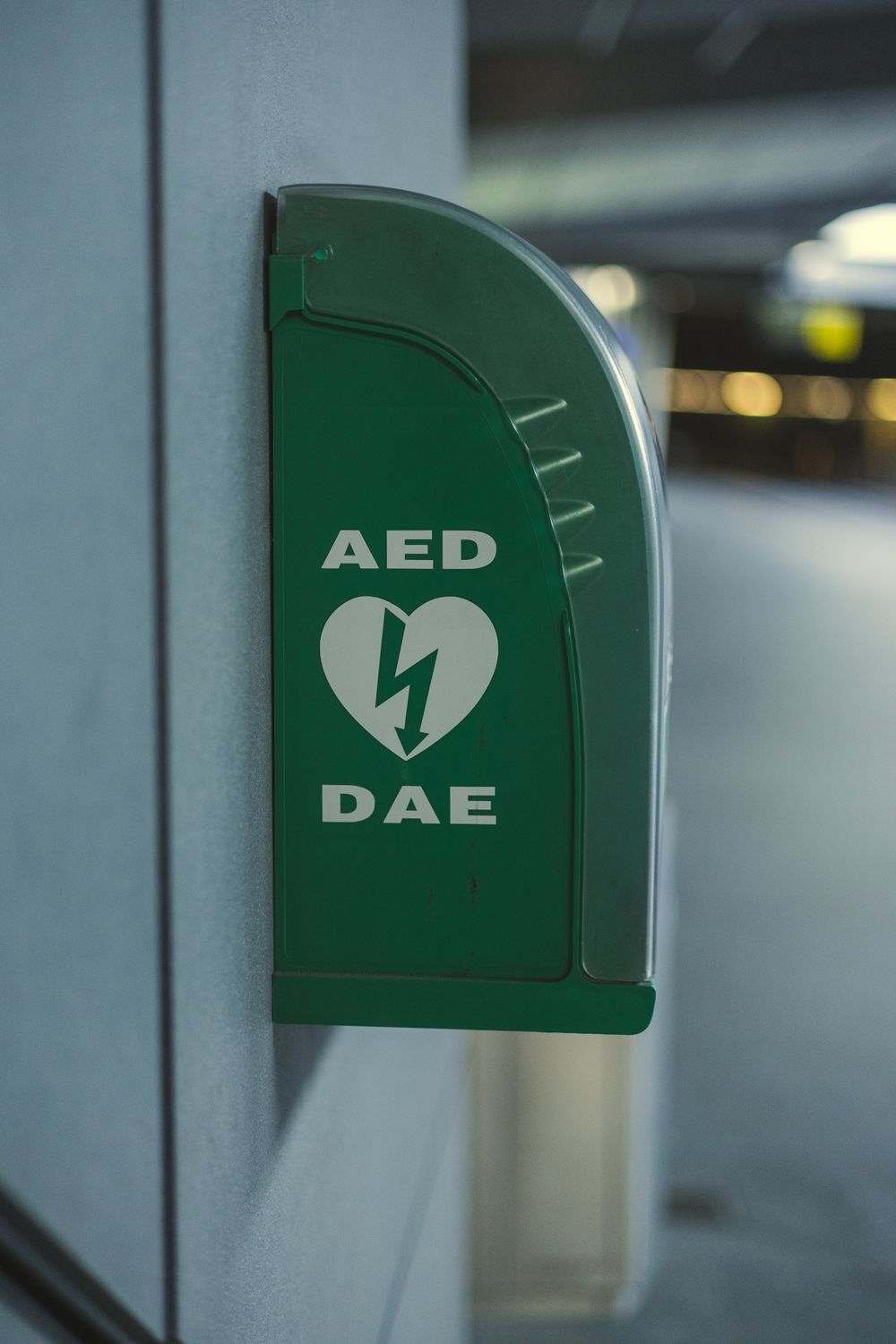
- Proper storage. The AED and its kit must be kept together in a suitable place that protects them from dust, moisture, and other substances on site that could damage them. The spot must be unobstructed and easy to access. If it is outdoors, it also has to be protected from extreme temperatures, moisture, and direct sunlight.
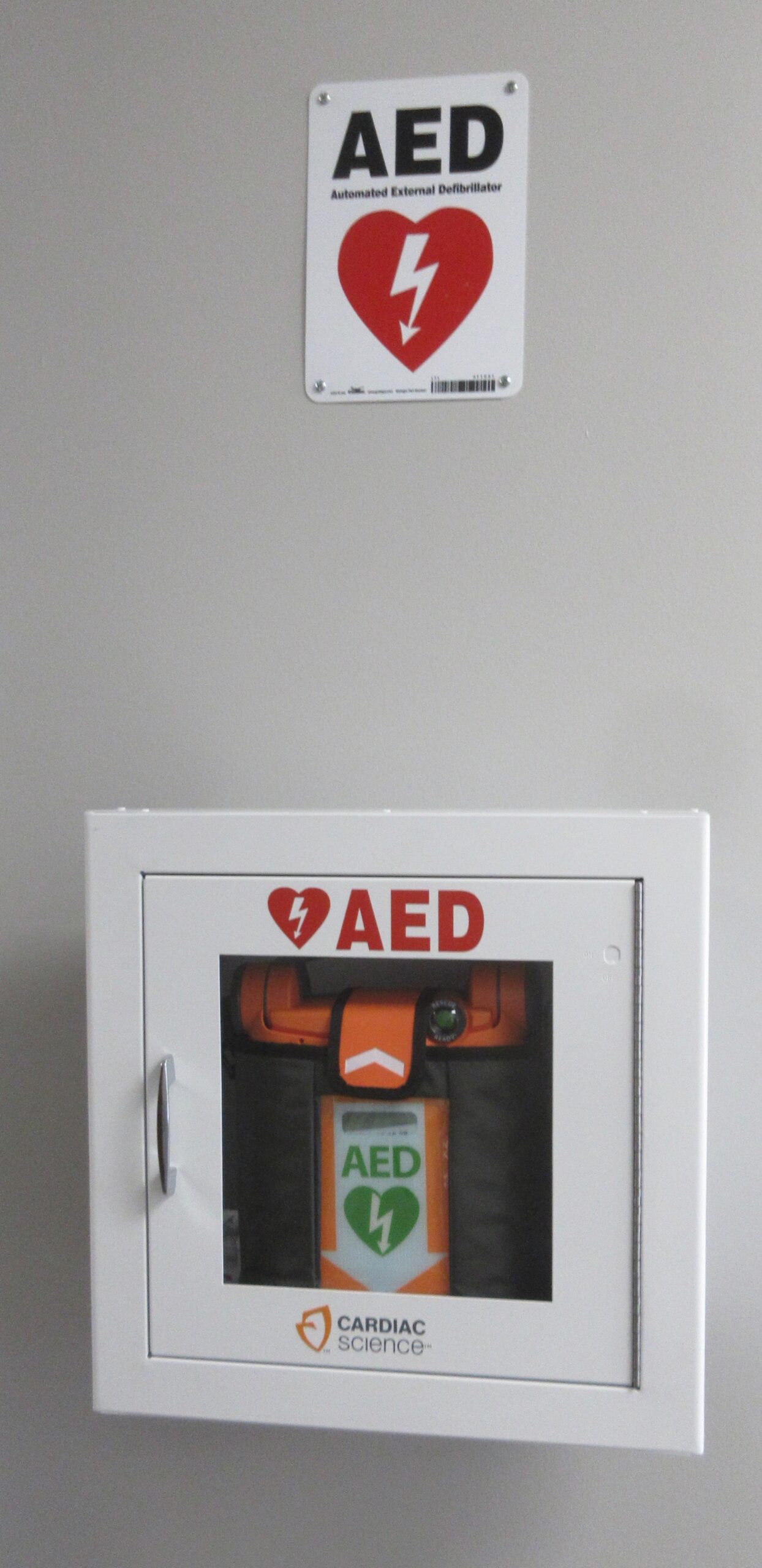
- Signage. The storage location must be clearly labelled, and signs must be posted at the AED and at other locations around the project pointing to where it is. Each sign must show the heart-with-a-lightning-bolt symbol and the words “Automated External Defibrillator” or “AED” (or the French “Défibrillateur externe automatisé” / “DEA”).
- Maintenance, testing, and quarterly inspections. The AED must be maintained and tested following the manufacturer’s instructions, and inspected every quarter by a competent worker, also following the manufacturer’s instructions.
- An inspection record kept with the AED. The record has to show the date of each inspection and the name and signature of the competent worker who did it.
- A trained worker on site at all times work is in progress. This is the requirement in section 27.1(9), and it is the one that turns an equipment purchase into a training plan: whenever work is underway, a worker trained in CPR and defibrillator operation must be present.
The defibrillator reimbursement: up to $2,500 back
Ontario also created a reimbursement program for the device itself (O. Reg. 360/25). In plain terms:
- Up to $2,500 back for one defibrillator per qualifying project
- The defibrillator must be purchased between July 1, 2025 and June 30, 2027
- The application must reach by July 31, 2027, with proof of purchase and, for projects covered by the AED rule, the project’s approved notification form or the Ministry project number
The reimbursement covers the device. It does not train your crew — that part is on you, and it is the part the regulation actually checks for every working day.
Why training is the piece that matters most
An AED is designed to be used under pressure, by a real person, in the worst minutes of someone’s life. A device in a labelled cabinet does not help if the workers on shift have never practised with one, are not sure where it is, or hesitate to start CPR.
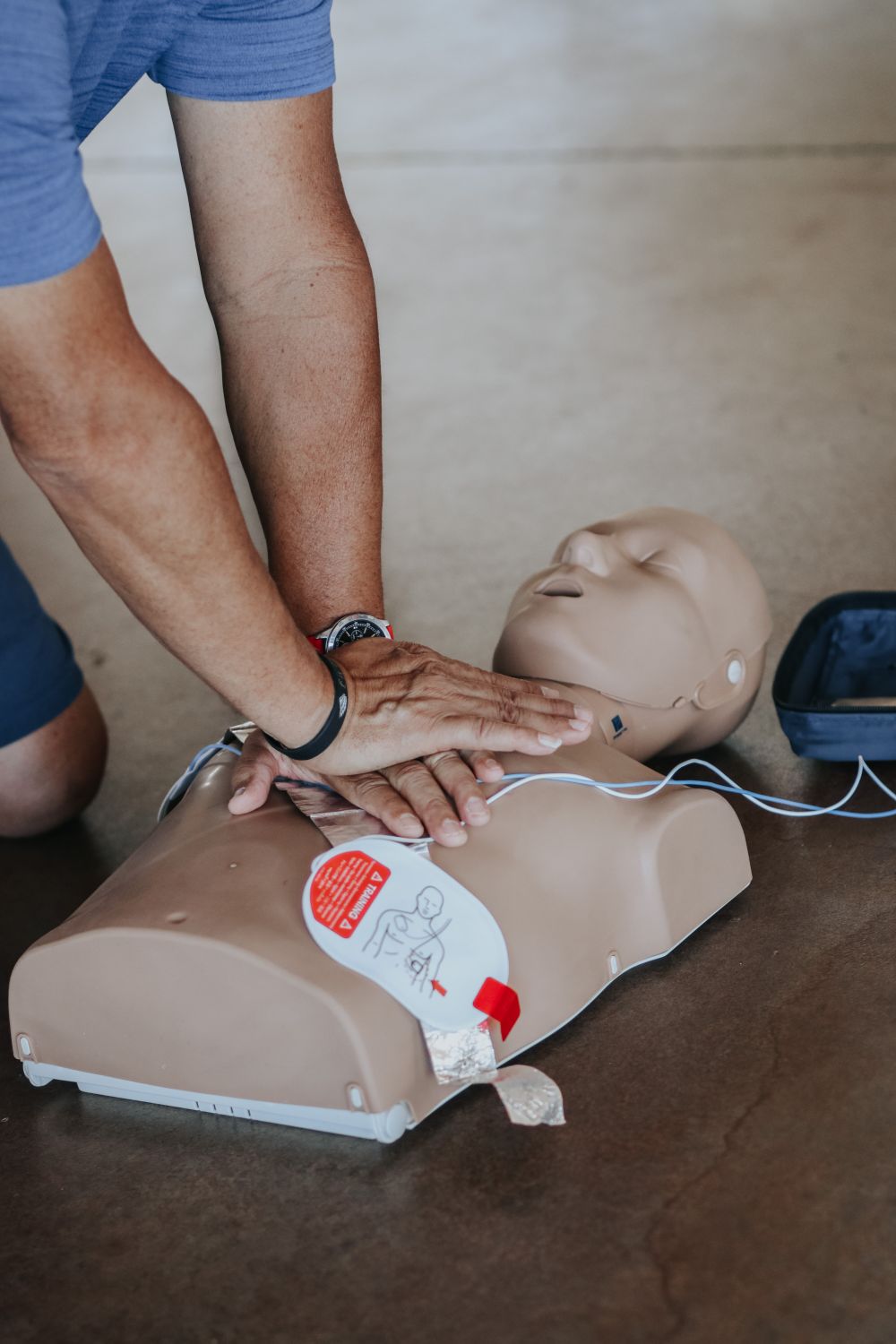
That is what training fixes. In our courses, every student practises CPR and works hands-on with AED trainers — pads on, prompts followed, shock delivered in simulation — until the sequence is familiar. Our training is aligned with the 2025 AHA Guidelines for CPR and ECC, and certificates are issued the same day.
For construction crews, the practical options are:
- CPR Level C & AED — $54.99 + HST. CPR and AED only: recognizing cardiac arrest, high-quality compressions for adults, children, and infants, AED use, and choking relief. This is the direct match for the “trained in CPR and defibrillator operation” requirement.
- Basic First Aid & CPR Level C — $74.99 + HST. Everything in CPR Level C, plus essential first aid: bleeding control, wound care, heart attack and stroke recognition, allergic reactions, and more.
- Intermediate First Aid & CPR Level C — $114.99 + HST. Our most complete course — everything in Basic, plus head and spine injuries, fractures and splinting, environmental emergencies, and the full first aid curriculum. The right choice when a site wants trained first aiders, not just CPR coverage.
All three run in blended format — online learning first, then one hands-on in-class session — with classes across Toronto, Scarborough, Mississauga, Brampton, Hamilton, and Barrie. We also run on-site training for workplaces and groups: tell us your crew size and site location and we will quote it.
One honest note: The Academy for First Aid and Safety is an independent training provider. — the reimbursement is a government program you apply to directly.
A simple way to check your site
- Count your regular workers. 20 or more?
- Check your timeline. 3 months or longer?
- If both are yes: is a Health Canada-licensed AED installed, with the full kit, in a signed, protected, easy-to-reach spot?
- Is it being tested and inspected quarterly, with a signed record kept with it?
- On every shift, is at least one worker present who is trained in CPR and AED use — including when your regular person is sick, on vacation, or on another site?
If that last answer is ever “no,” you do not have a device problem. You have a training roster problem — and that is exactly what we can fix.
Ready to get your crew trained?
Register your workers online, or contact us about on-site group training for your site:
https://www.academyfor1staid.ca/register-for-a-course
Use promo code SAVE-TEN for 10 percent off individual registrations.
The Academy for First Aid and Safety
1-877-659-3215
www.academyfor1staid.ca
Sources (checked October 22, 2026):
- O. Reg. 157/25: Construction Projects, Ontario e-Laws — https://www.ontario.ca/laws/regulation/r25157 (new section 27.1 in O. Reg. 213/91; in force January 1, 2026)
- O. Reg. 360/25: Reimbursement for Defibrillators, Ontario e-Laws — https://www.ontario.ca/laws/regulation/r25360