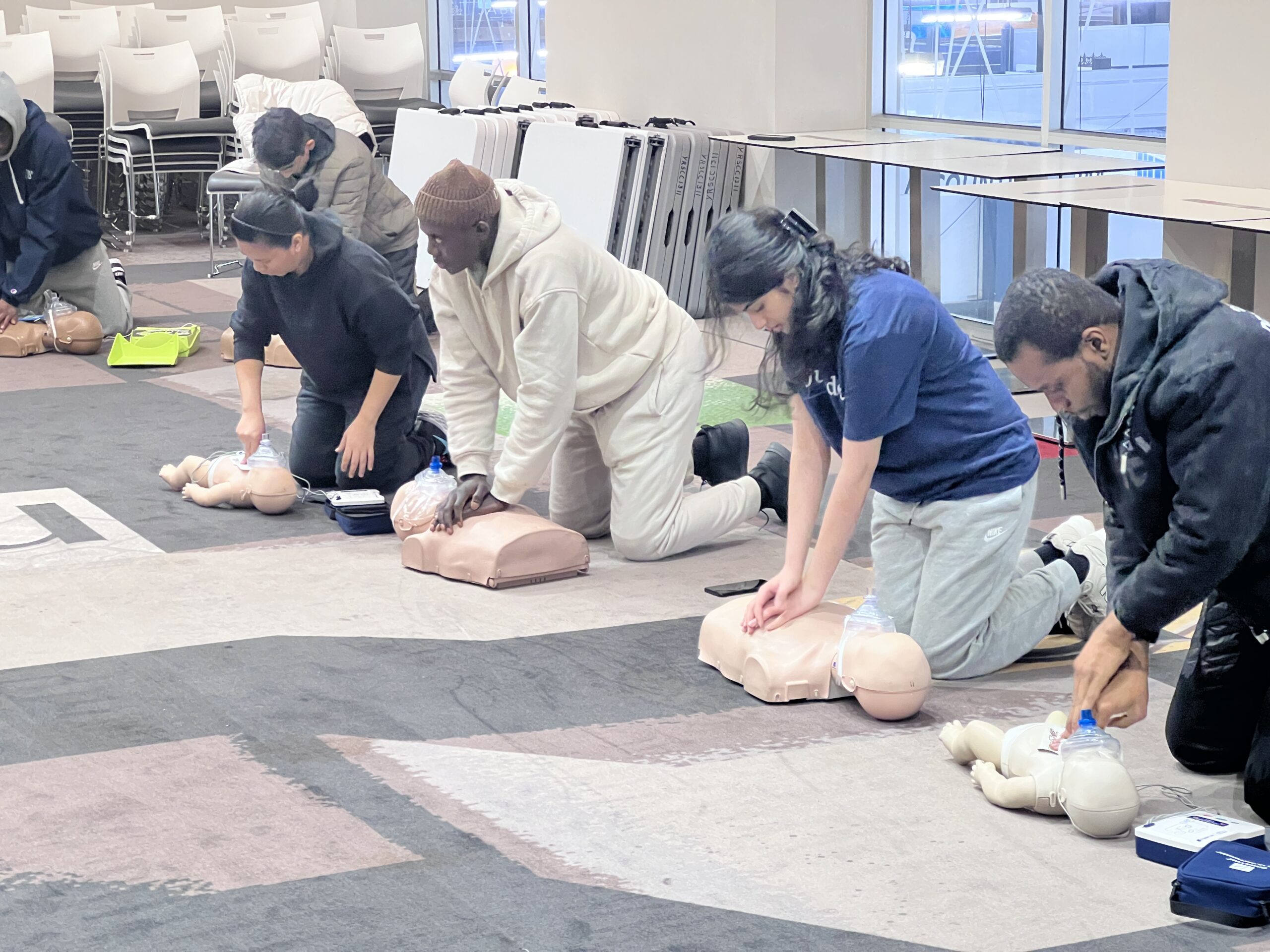
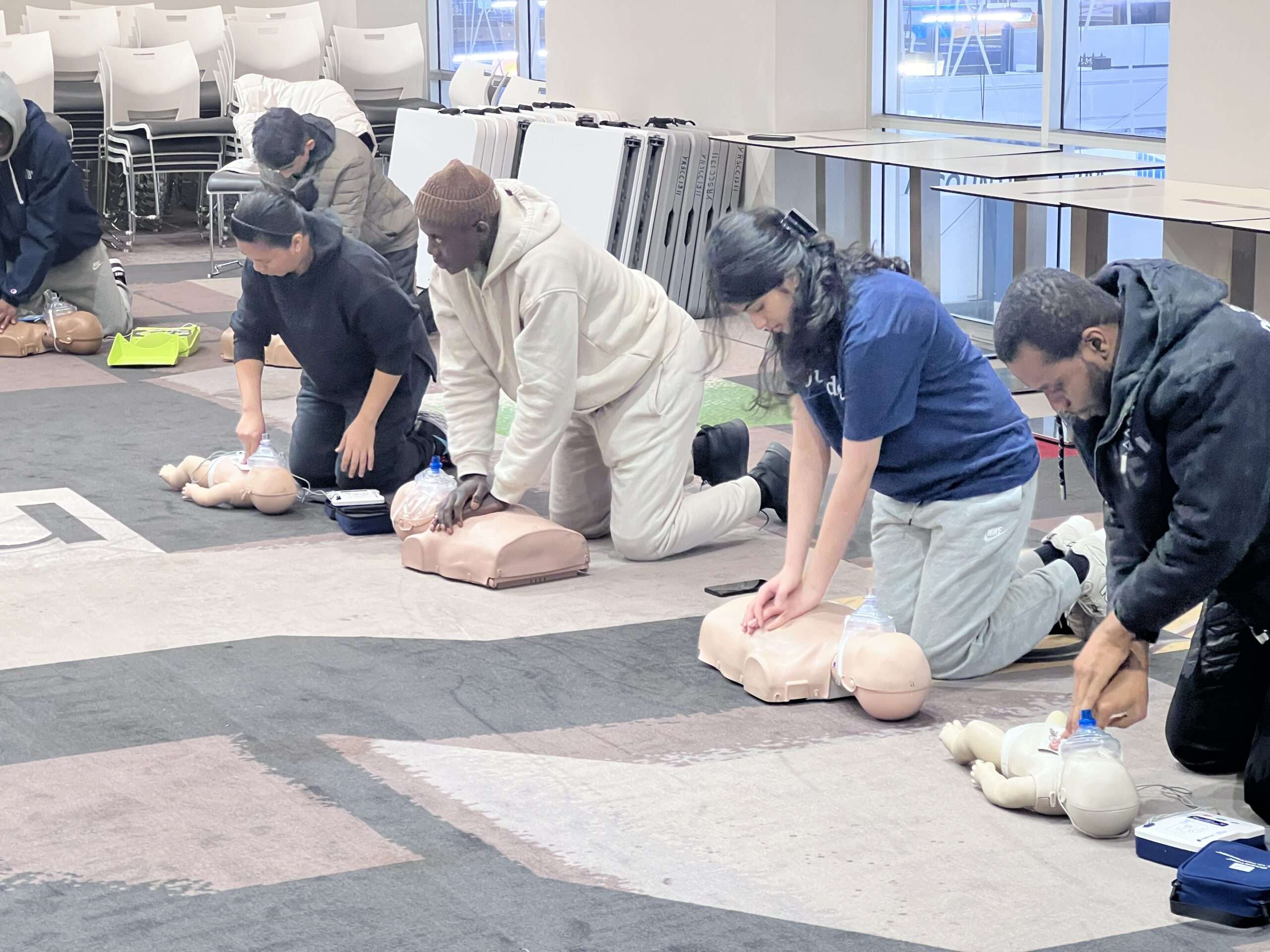
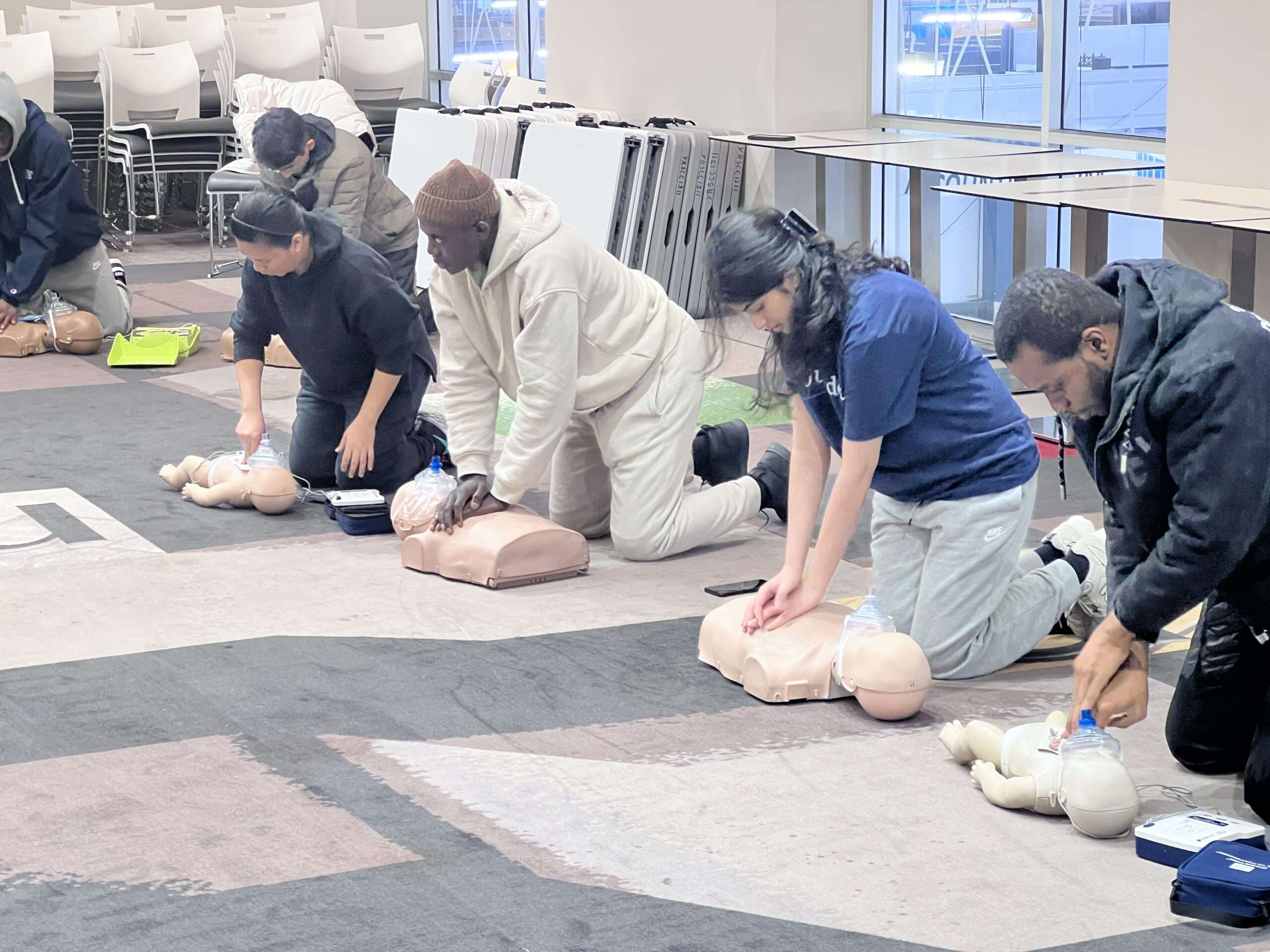
If you work a lobby, a mall, a condo, a construction gate, or an event entrance, first aid training for security guards in toronto is not a nice-to-have — you are often the first person on scene when someone collapses, is injured, or stops breathing. Guards are visible, nearby, and expected to act while help...Read More
If you are starting a nursing, paramedic, dental, or other health program, bls training for healthcare students in toronto is probably already on your placement checklist — and it is usually one of the items with a hard deadline. Schools and placement sites want proof that you can respond to a cardiac emergency before you...Read More
If you run or work at a childcare centre, nursery school, or after-school program, first aid training for daycare staff in Toronto is not a nice-to-have — it is part of keeping every child in your care safe on an ordinary day and on the one day something goes wrong. Young children fall, choke, scrape...Read More
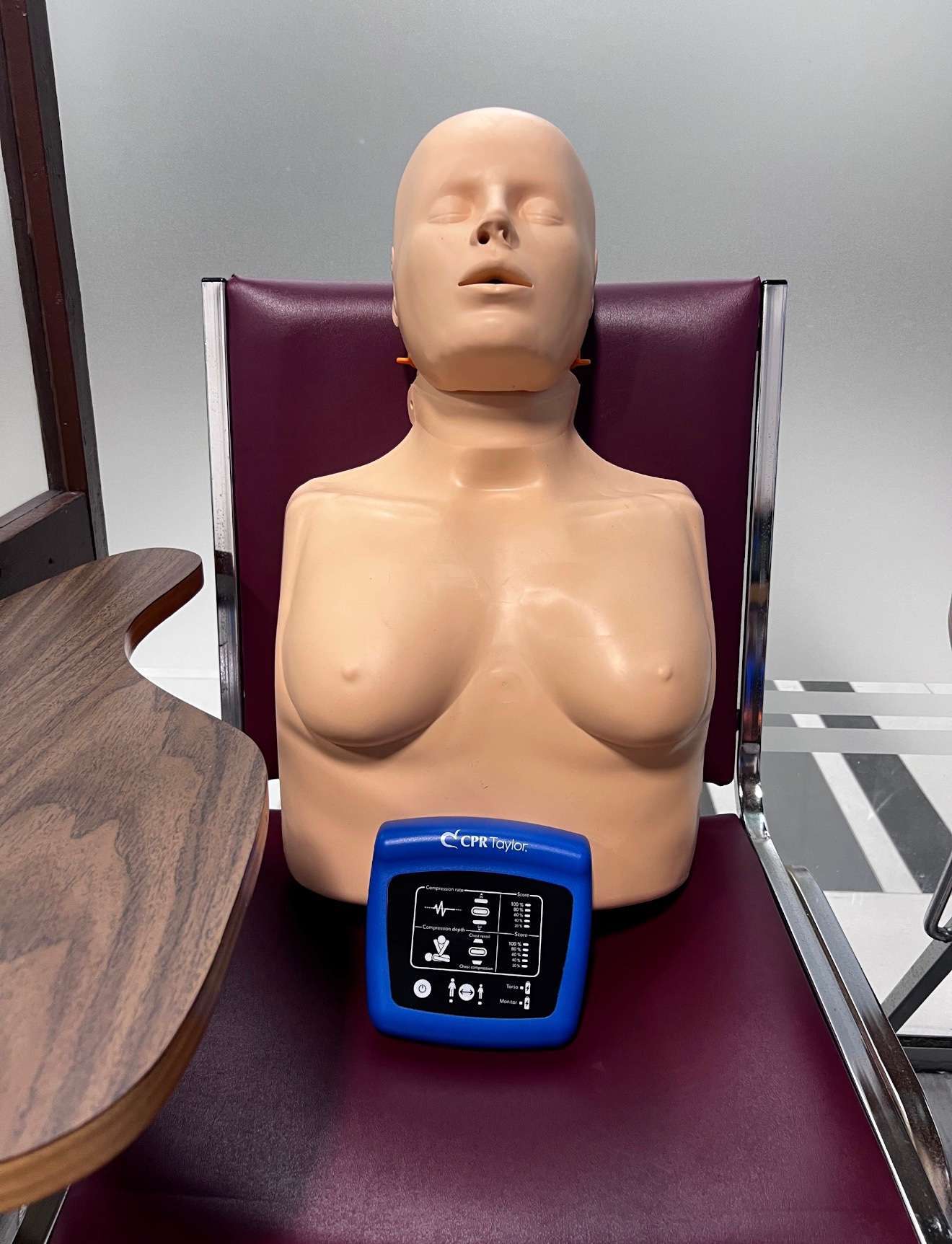
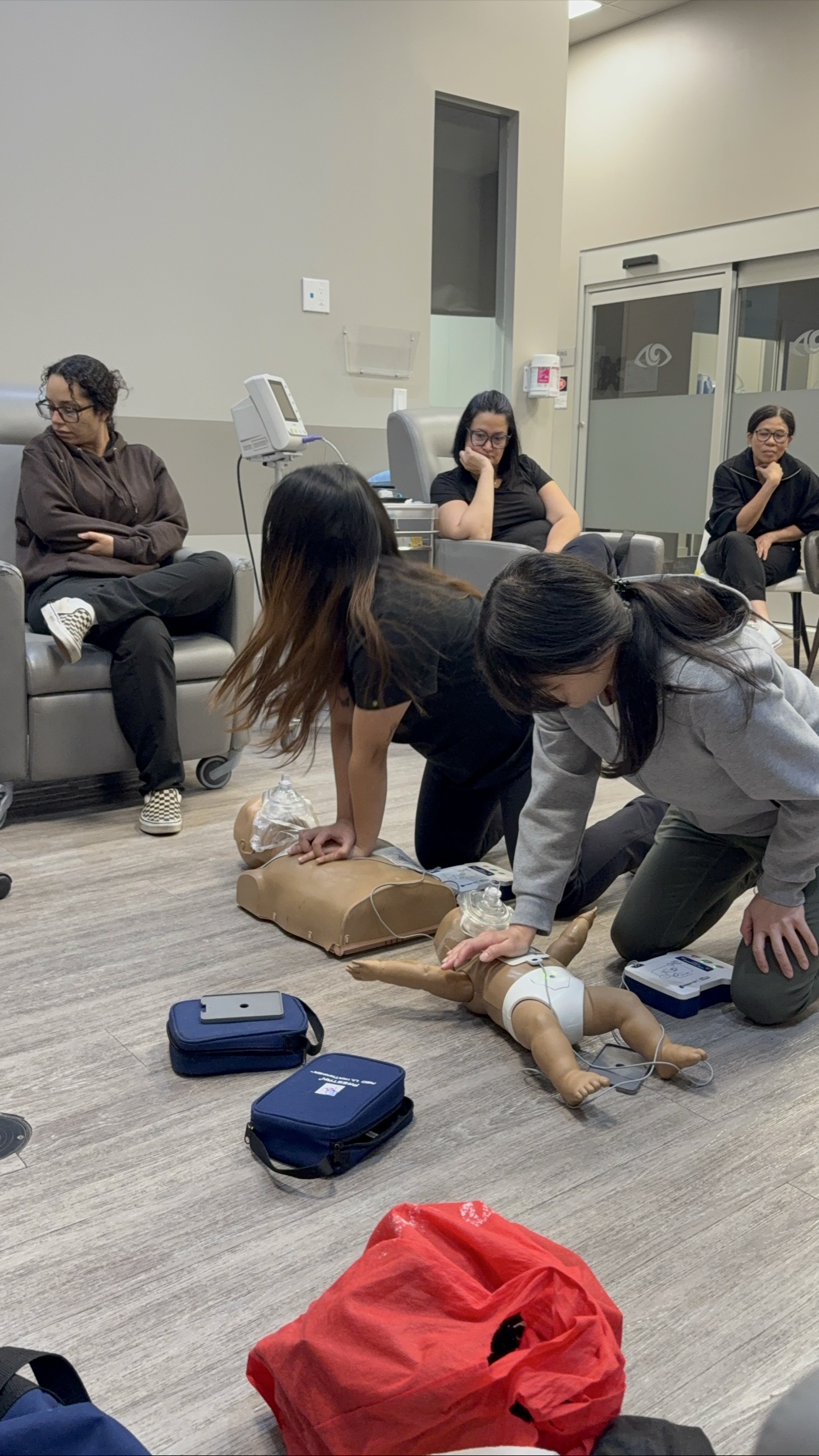
Would you know what to do if someone you love collapsed in front of you? If that person were a woman, would you hesitate before starting CPR on women like her — worried about touching her chest, or about getting in legal trouble? That hesitation is common, it is understandable, and it costs lives. This...Read More
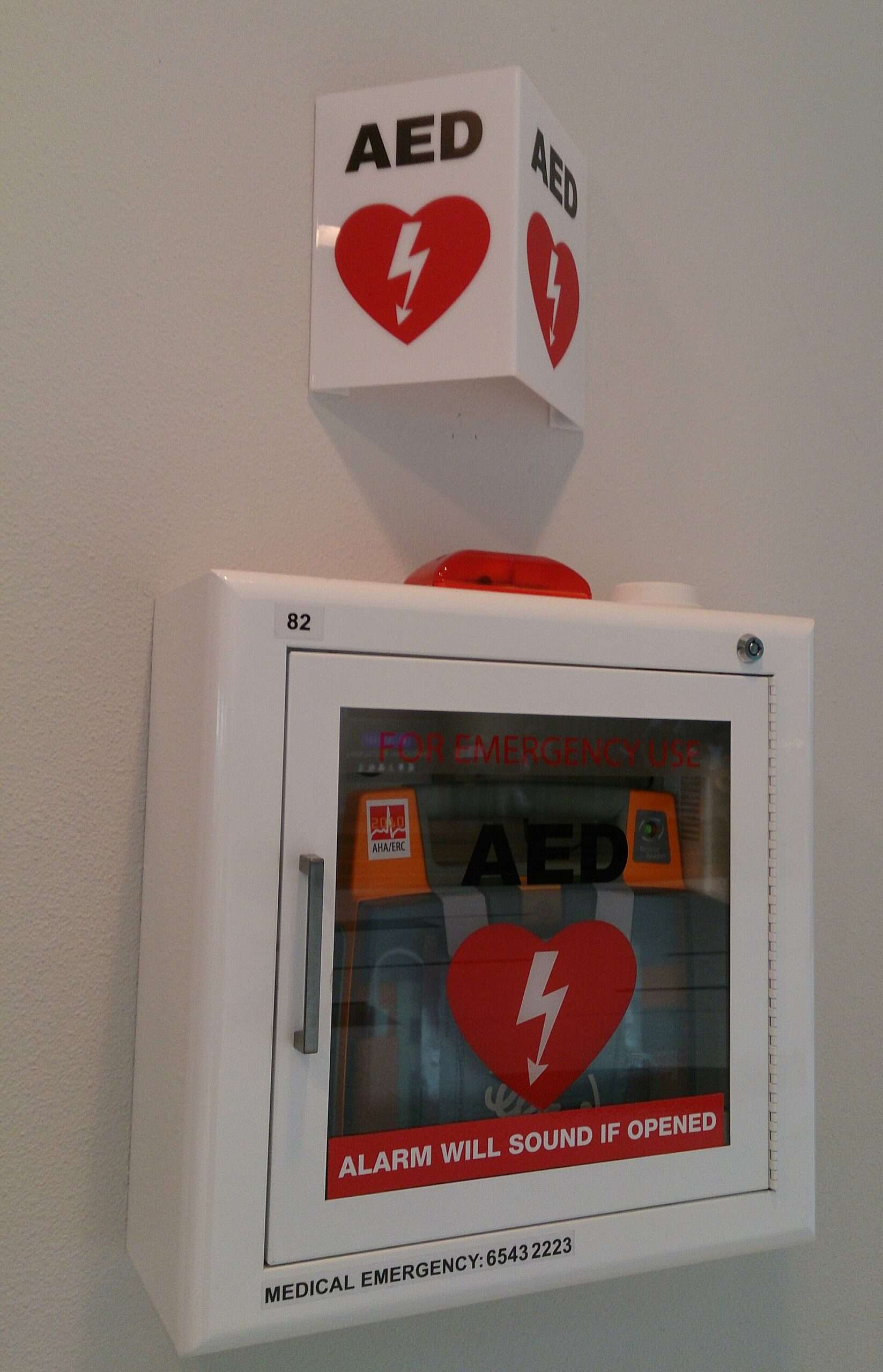
Photo: ProjectManhattan, via Wikimedia Commons (CC BY-SA 3.0)There is an aed subsidy Ontario construction sites can claim — and it can put up to $2,500 per project back in your budget. Since January 1, 2026, larger construction projects in Ontario must have an automated external defibrillator (AED) on site. What gets less attention is the...Read More
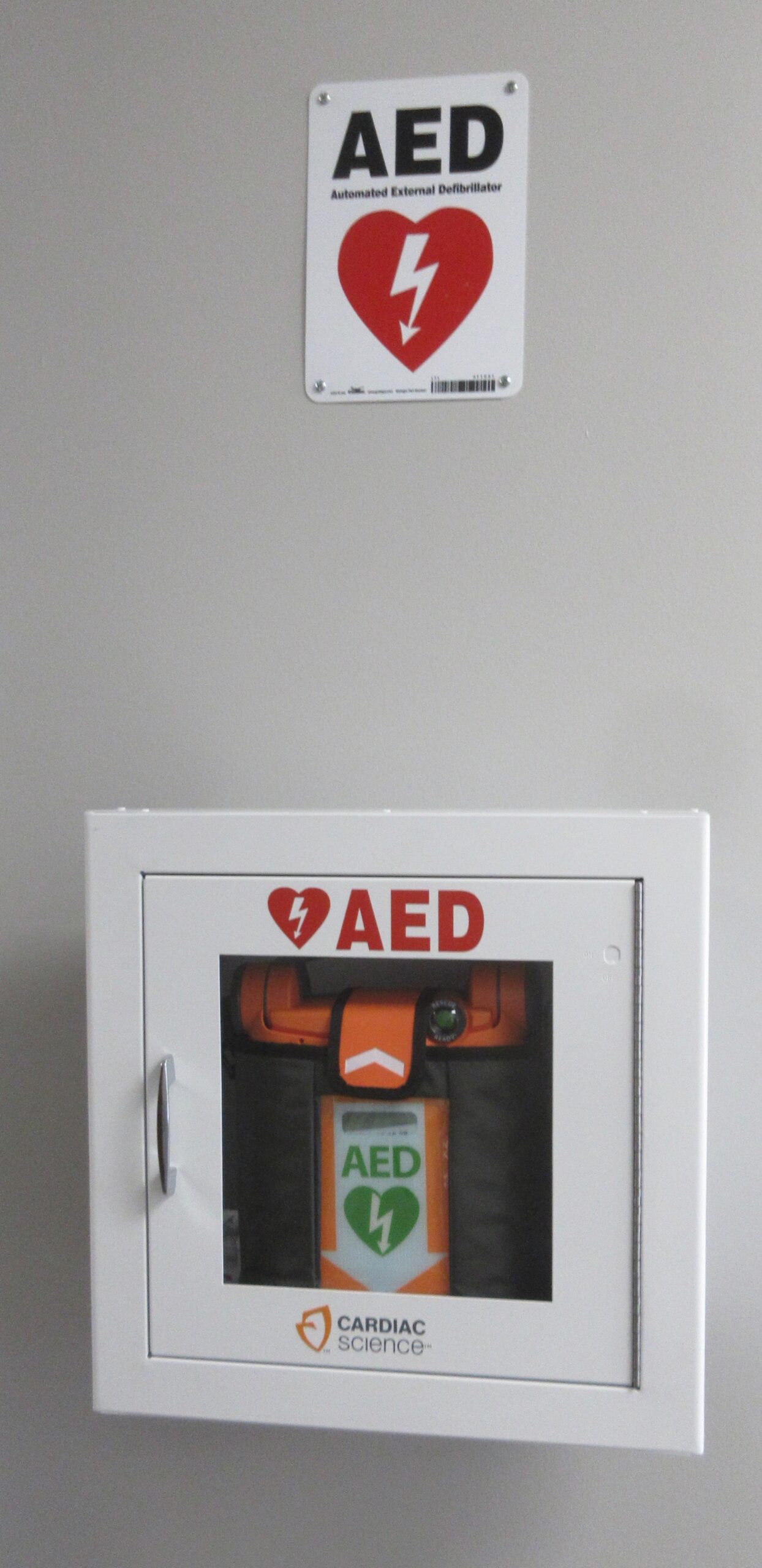
Ontario construction sites changed on January 1, 2026. A defibrillator is no longer just a good idea on a large project — for many sites, it is now the law. The rule is Ontario Regulation 157/25, which added a new defibrillator section (section 27.1) to the construction projects regulation under the Occupational Health and Safety...Read More
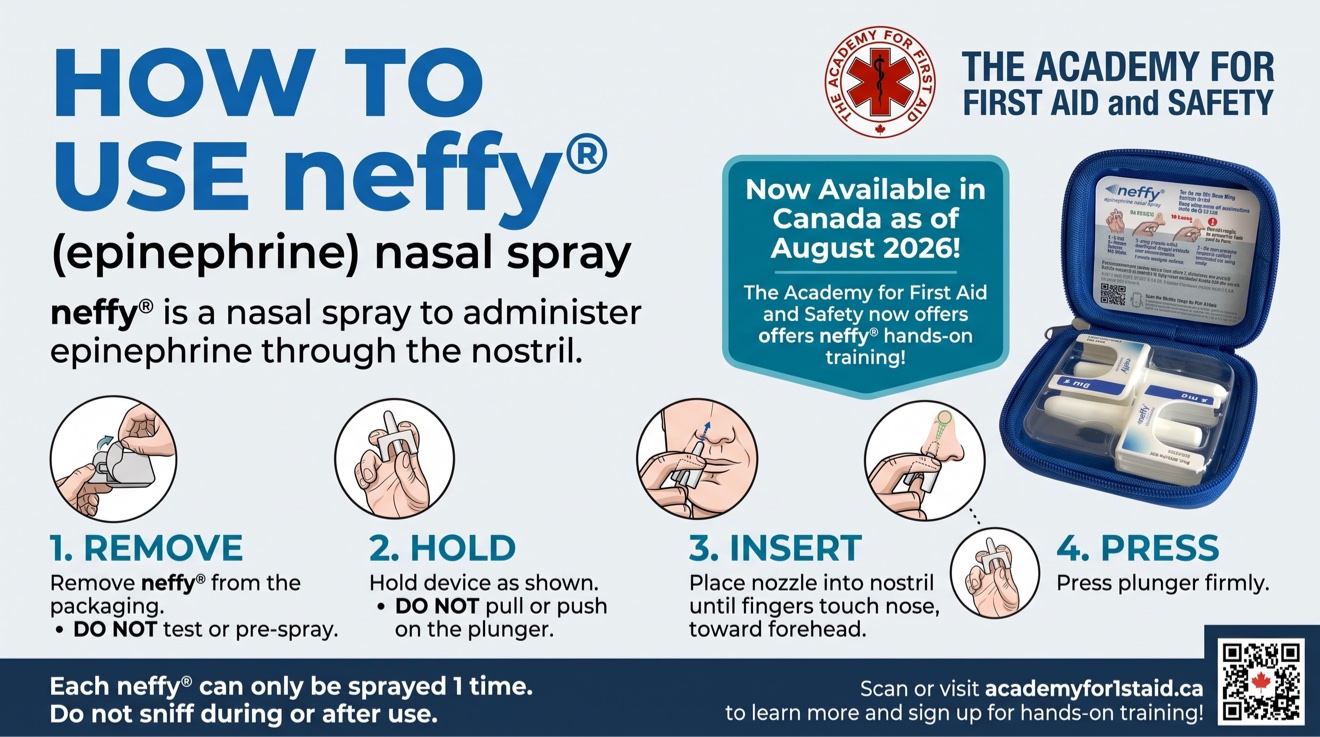
Anaphylaxis is a severe, life-threatening allergic reaction, and epinephrine is the first and most important treatment. For decades, Canadians had exactly one way to give epinephrine outside a hospital: the EpiPen auto-injector, a needle injection into the outer thigh. That changed in August 2026, when neffy — an epinephrine nasal spray — became available in...Read More
You did the work. You passed your first aid and CPR course. Now you need the certificate — your employer wants it before your start date, your school needs it for your placement file, and the deadline is not moving. So you wait. And wait. Getting the certificate into your hands, quickly, is one of...Read More
If you have been looking for an Emergency First Aid or Standard First Aid course lately, you may have noticed something confusing: those names are disappearing. Canada’s first aid course names have been updated, and at The Academy for First Aid and Safety we now use the new names across all of our courses. The...Read More
Hypothermia and Hyperthermia: First Aid Treatment and Signs & Symptoms: What is hypothermia?Hypothermia happens when the body loses heat faster than it can produce it, causing the core temperature to drop below 35°C (95°F). This can occur from cold weather, wet clothing, wind, or prolonged exposure to cold water.Signs and symptoms:Shivering (early sign, may stop...Read More
Recent Comments