
Would you know what to do if someone you love collapsed in front of you? If that person were a woman, would you hesitate before starting CPR on women like her — worried about touching her chest, or about getting in legal trouble? That hesitation is common, it is understandable, and it costs lives. This article explains why it happens, why the law protects you when you help, and how training on a female mannequin removes the fear before a real emergency ever happens.
Most emergencies happen at home — to the people you love most
A 2022 survey found that only 33% of Ontario respondents had taken First Aid or CPR training within the past five years. That means most people around you have not — and in an emergency, that gap can cost a life.
Here is something many people don’t realize: statistics show that the majority of 911 calls requesting an ambulance are to a residence. Emergencies don’t usually happen in public places with strangers around. They happen at home — to the people closest to you.
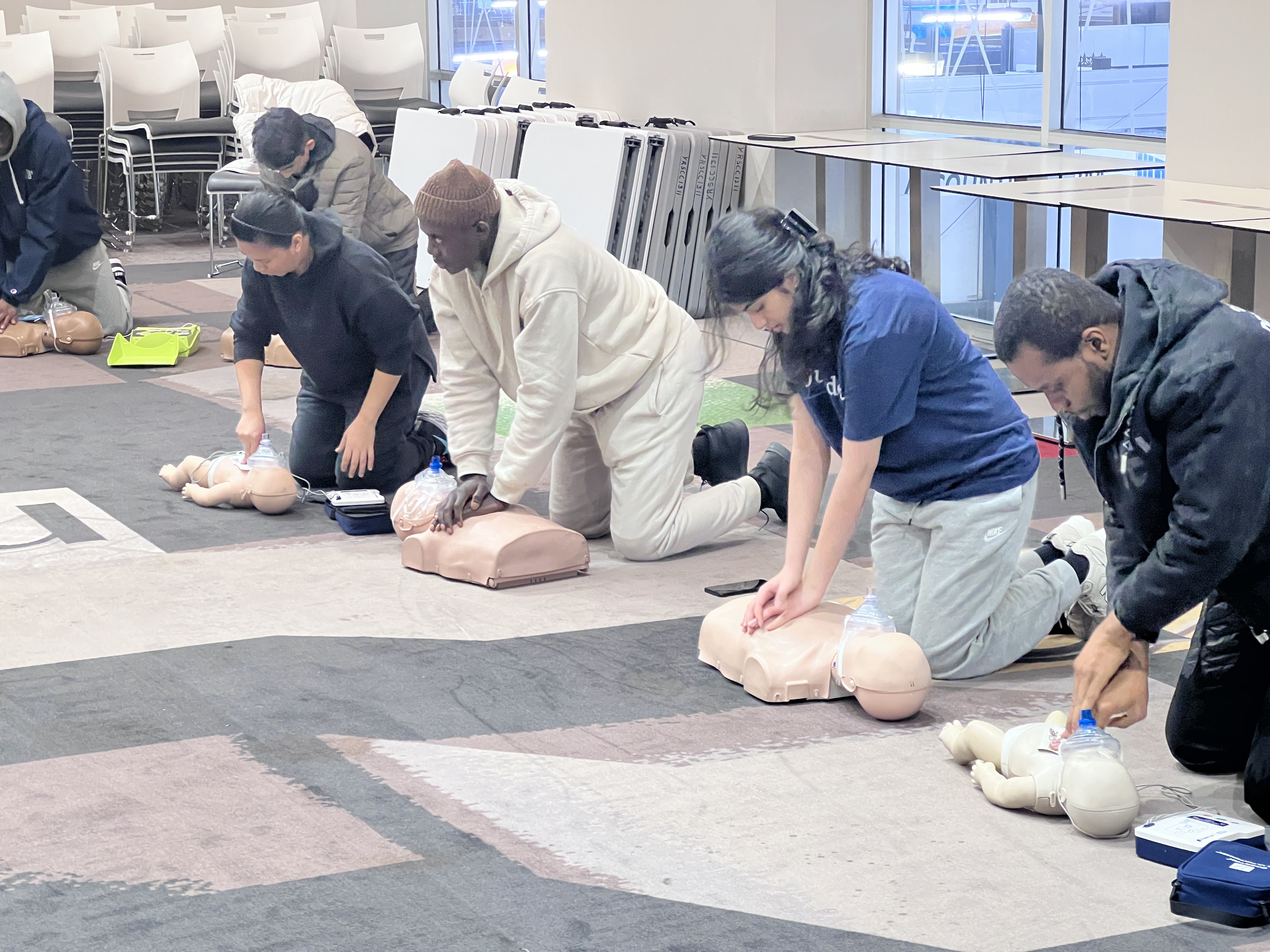
Your family is the most important people in your life. If something happens at home, you will most likely be the one standing there. Training means you won’t have to feel helpless in that moment. Our courses are aligned with the 2025 AHA guidelines, and every skill is practised hands-on, so what you learn in class is what you can actually do at your kitchen table or in your living room.
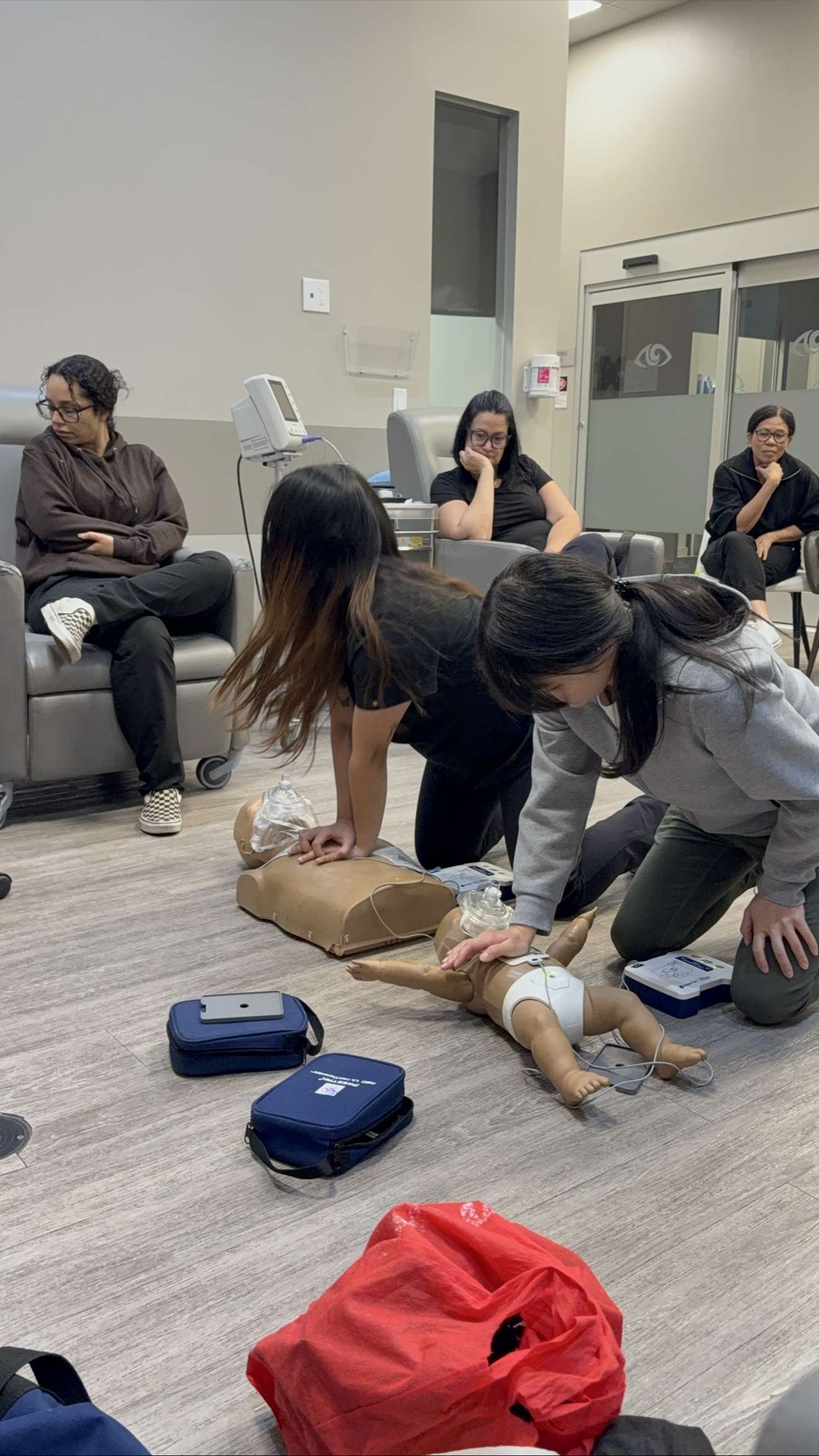
Why women have a lower chance of surviving cardiac arrest
Now, an important issue we need to talk about openly.
Women have a substantially lower chance of surviving a cardiac arrest with CPR — not because CPR works differently on women, but because bystanders hesitate. Many people fear legal trouble, or feel uncomfortable about touching a woman’s chest, so they hold back. Those seconds of hesitation can be the difference between life and death.
A woman in cardiac arrest needs compressions just as fast and just as firmly as anyone else. Everyone deserves the same chance to receive CPR, regardless of gender.
Ontario’s Good Samaritan Act protects you when you help
Please hear this clearly: Ontario’s Good Samaritan Act protects you. If you help someone in an emergency, in good faith and with a genuine, serious intent to help — and you are not grossly negligent — the law protects you. You will not get in legal trouble for trying to save a life. Never let fear of the law stop you from helping.
Raising the bar for female CPR at the Academy
At The Academy for First Aid and Safety, we want to raise the bar for female CPR. Knowing the law protects you is one thing — feeling confident about where your hands go on a woman’s chest is another. That confidence comes from practice, and the practice has to be realistic.
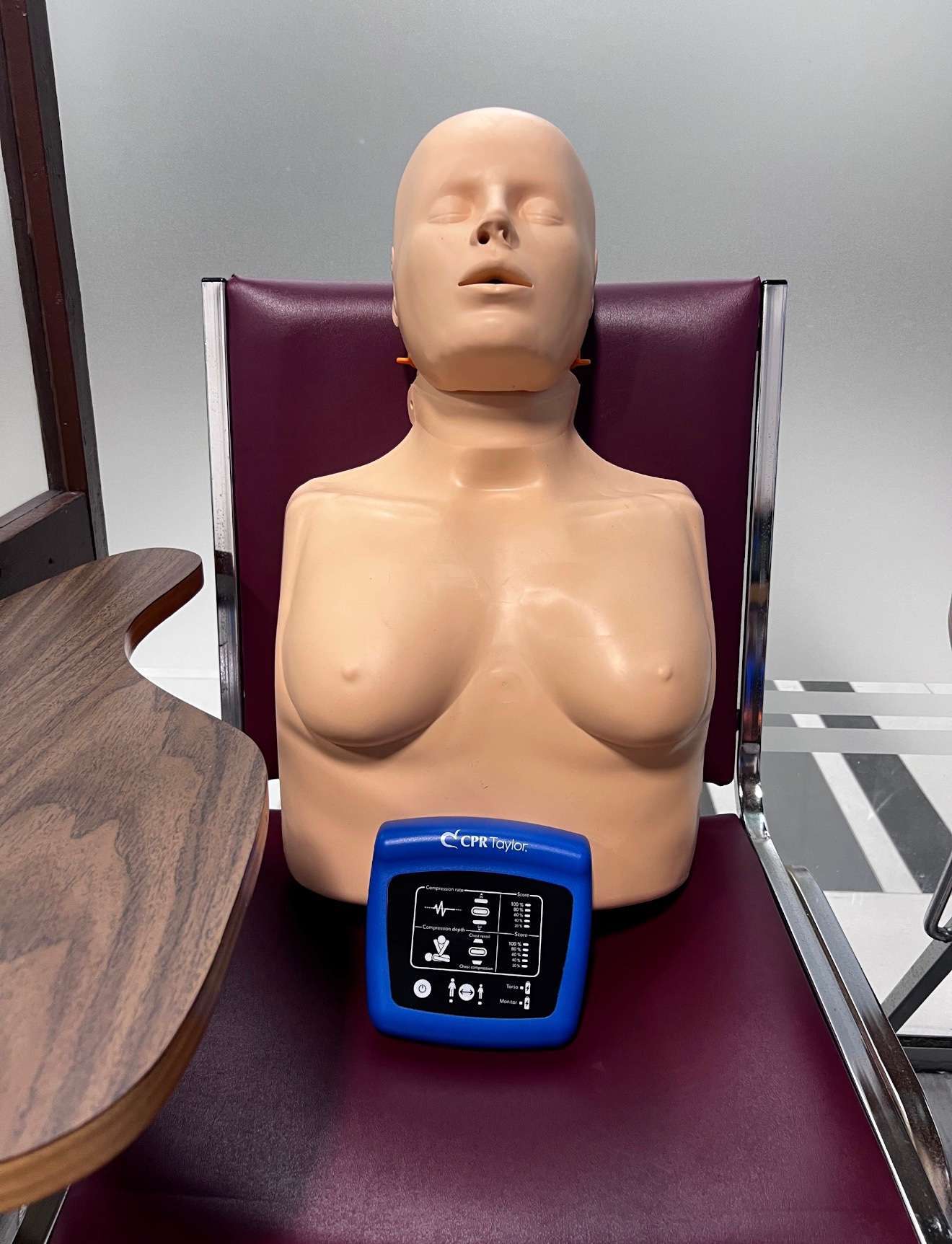
Meet the CPR Taylor: a female mannequin that scores your compressions
That’s why our classes now train on the CPR Taylor — a female mannequin with realistic landmarks, and one of the most advanced CPR mannequins on the market today. It has three built-in electronic sensors — a depth sensor, a speed sensor, and a chest recoil sensor — that measure the quality of your compressions and generate a score, as a percentage, showing exactly how well you are performing. Students get interactive, real-time feedback while they practise proper hand placement on a woman’s chest — so the fear and hesitation are gone before it ever happens in real life.
Two things that are completely normal during CPR on women
Two things we teach every student, because they are completely normal:
- Your hands will touch her breast. During CPR, your hands will physically touch one of the breasts. That is expected — proper hand placement is in the centre of the chest, and contact is simply part of doing CPR correctly.
- A bra may need to come off. Some bras may need to be removed, because underwire and metallic mesh can interfere — for example, with AED pads sticking and working properly. This is normal, and it is standard protocol everywhere. Saving her life comes first, always.

Train in five cities across the GTA and Hamilton
The Academy for First Aid and Safety delivers high-quality First Aid and CPR training in five cities: Toronto, Hamilton, Mississauga, Brampton, and Barrie. Whether you want full certification or to build confidence specifically in CPR on women, there is a class near you:
- Intermediate First Aid & CPR Level C — the full first aid curriculum. See our Intermediate (Standard) First Aid and CPR course page for what it includes.
- Basic First Aid & CPR Level C — CPR, AED, and everyday first aid essentials.
- CPR Level C & AED — resuscitation skills on their own, for adults, children, and infants.
Training in the city? See our Toronto first aid, CPR and BLS training page for Toronto dates and details.
Book your seat
Come train with us, get confident, and be ready for the people who matter most.
Register for a course online, or call 905-884-6036 (Toll-free: 1-877-659-3215) with questions about dates and locations.
Use promo code SAVE-TEN for 10 percent off
Best regards, and stay safe,
The Academy for First Aid and Safety
www.academyfor1staid.ca
Frequently asked questions about CPR on women
Is it legal to perform CPR on a woman in Ontario?
Yes. Ontario’s Good Samaritan Act protects anyone who helps in an emergency in good faith, with a genuine, serious intent to help, as long as they are not grossly negligent. You do not need to fear legal trouble for starting CPR on a woman — or on anyone.
Will my hands touch a woman’s breast during CPR?
Yes, and that is completely normal. Proper hand placement is in the centre of the chest, so your hands will physically touch one of the breasts as you compress. That contact is simply part of doing CPR correctly, and it should never stop you from helping.
Does a woman’s bra need to be removed before using an AED?
It may. Underwire and metallic mesh in some bras can interfere with AED pads sticking and working properly, so removing the bra is normal, standard protocol when it gets in the way. Saving her life comes first, always.
Where can I take female CPR training near me?
The Academy for First Aid and Safety trains students on the CPR Taylor female mannequin in Toronto, Hamilton, Mississauga, Brampton, and Barrie. Register online at https://www.academyfor1staid.ca/register-for-a-course or call 905-884-6036 (Toll-free: 1-877-659-3215) — use promo code SAVE-TEN for 10 percent off.